A reader’s guide to Emma
WTF Is a Barouche-Landau?
The things Jane Austen expected you to know in 1815.
Jane Austen does not stop to explain what a barouche-landau looks like, why Jane Fairfax writes across her own writing, what exactly Harriet means by being a parlour-boarder, or why Mrs Elton mentioning her sister’s carriage for the fourth time tells you rather more about Mrs Elton than it does about the carriage.
Her first readers did not need the help.
Two hundred years later, we occasionally do.
This is a reader’s guide to some of the objects, customs, food, transport and social shorthand that Austen drops into Emma without explanation.
Not everything here is important to the plot. Some of it just makes Highbury considerably easier to see.
Getting about
Barouche-landau
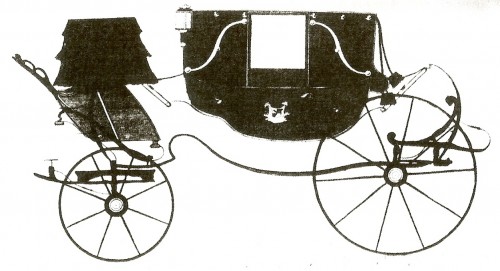
What is it?
A rather elaborate horse-drawn carriage combining features of a barouche and a landau. It had folding hoods that could shelter the passengers, substantial suspension and room for several people. Austen herself tells us the Sucklings’ version “holds four perfectly.”
The type was relatively new in Austen’s period and appears to have been uncommon.
In normal English
A large, expensive convertible.
Not merely transport. Transport you mention to people.
Repeatedly.
Why it matters in Emma
Mrs Elton cannot stop talking about her sister Selina’s barouche-landau. In a single conversation she manages to mention it again and again while describing all the delightful exploring they will do when the Sucklings visit.
The carriage tells us that the Sucklings have money. Mrs Elton making absolutely certain Emma knows about the carriage tells us something else entirely.
Owning and maintaining elaborate private carriages, horses, stabling and servants required serious money. The vehicle is therefore part transport and part social announcement.
Carriage, chaise and gig
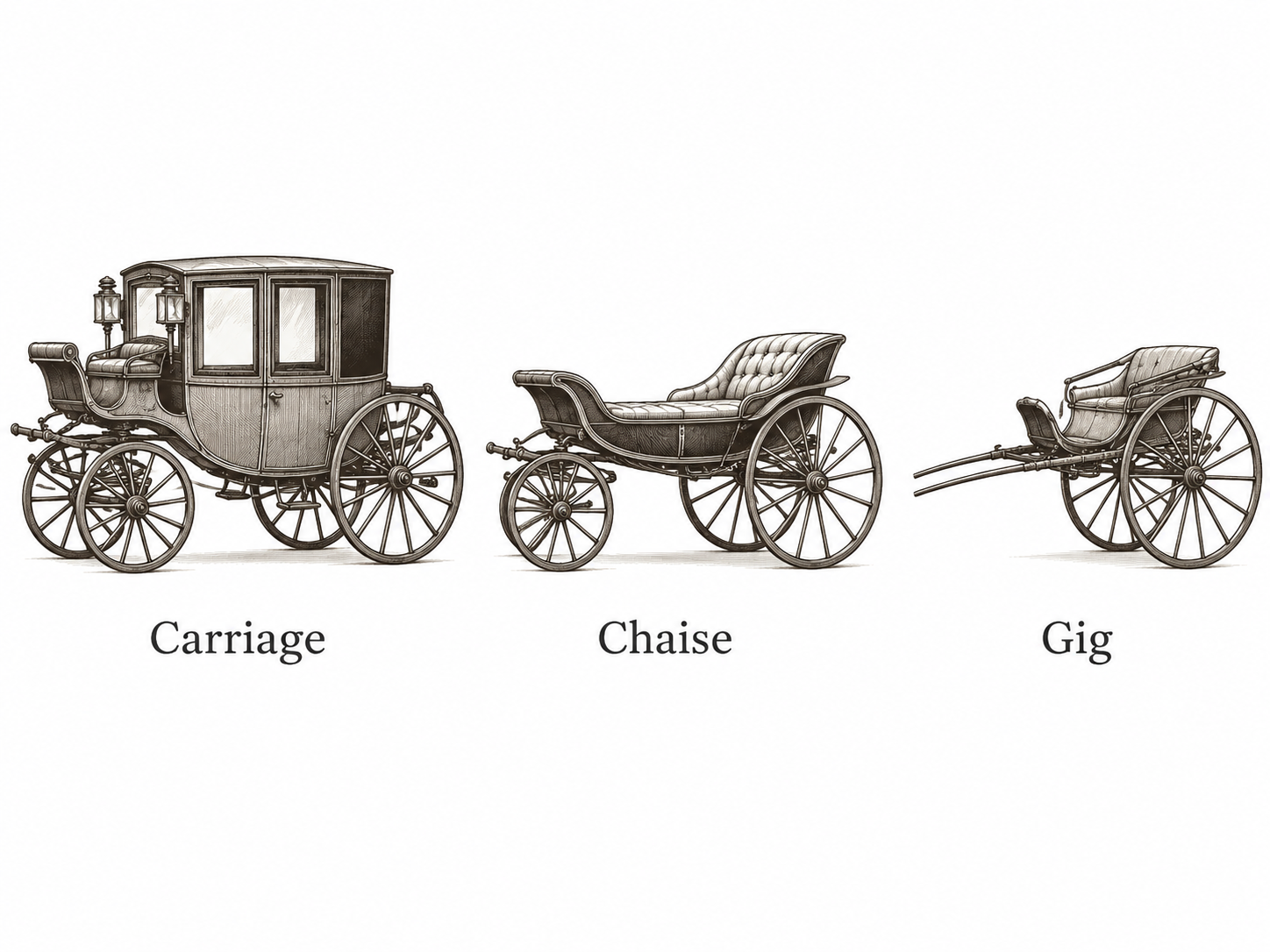
What are they?
“Carriage” is the broad term. A chaise and a gig are particular kinds of carriage.
A typical chaise was an enclosed, four-wheeled travelling vehicle, commonly drawn by two horses. A gig was much smaller: a light, generally two-wheeled vehicle for two people. Designs were not completely standardised.
In normal English
“Carriage” = car.
“Chaise” = comfortable travelling car.
“Gig” = tiny two-seat runabout.
“Barouche-landau” = please notice how much money my sister has.
Why it matters in Emma
Austen’s characters do not all travel in interchangeable brown boxes with horses attached.
What somebody owns, hires or arrives in can tell the original reader about money, distance, practicality and status before anybody opens their mouth.
Mrs Elton’s fascination with the Sucklings’ vehicles is therefore not random transport chat. It is social information with wheels.
Letters and news
“Checker-work”: crossed letters
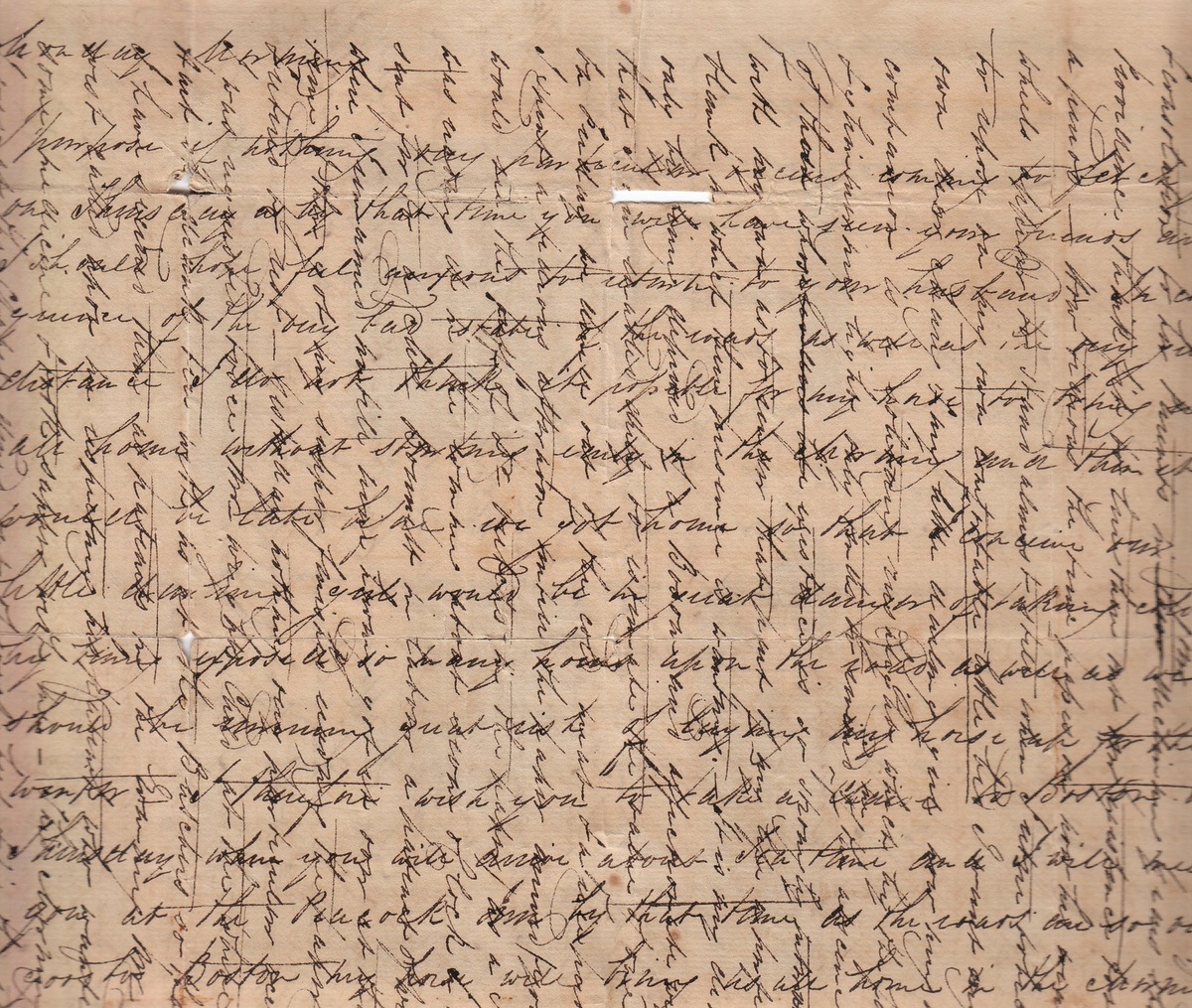
What is it?
When Miss Bates describes Jane Fairfax’s letters, she says Jane generally fills the paper and “crosses half.” Her mother calls the result “checker-work.”
This was a real writing practice. After filling a sheet normally, the writer turned the paper and continued writing across the existing text at roughly right angles.
Jane Austen herself did it in surviving letters.
In normal English
Write a letter.
Turn the paper ninety degrees.
Write another letter directly over it.
Then give the resulting optical nightmare to your aunt.
Why it matters in Emma
This is not Austen inventing some eccentric habit for Jane Fairfax. Her contemporary readers knew what Miss Bates meant.
It also tells us something wonderfully ordinary about Jane. She writes long letters. She uses her paper thoroughly. Miss Bates reads them repeatedly. Mrs Bates listens to them repeatedly.
The “checker-work” is a physical trace of a relationship.
The post-office
What is it?
Highbury has a post-office, and Jane Fairfax walks there herself to collect letters. She describes it as her “daily errand.”
By Austen’s lifetime Britain had a sophisticated postal network, and mail coaches had greatly increased the speed and regularity with which letters could move around the country.
In normal English
No inbox.
No notifications.
If you are desperately waiting to hear from somebody, you may literally have to put your shoes on and go looking for the mail.
Why it matters in Emma
Jane’s suspicious enthusiasm for fetching the post is not background decoration.
Letters are everywhere in Emma: anticipated, concealed, reread, interpreted and occasionally extremely inconvenient.
Jane walks to the post-office every morning because correspondence is one of the few private channels available to her.
And, as John Knightley observes, the post-office can acquire “a great charm at one period of our lives.”
He has absolutely no idea how right he is.
Music, food and other domestic mysteries
The mysterious pianoforte
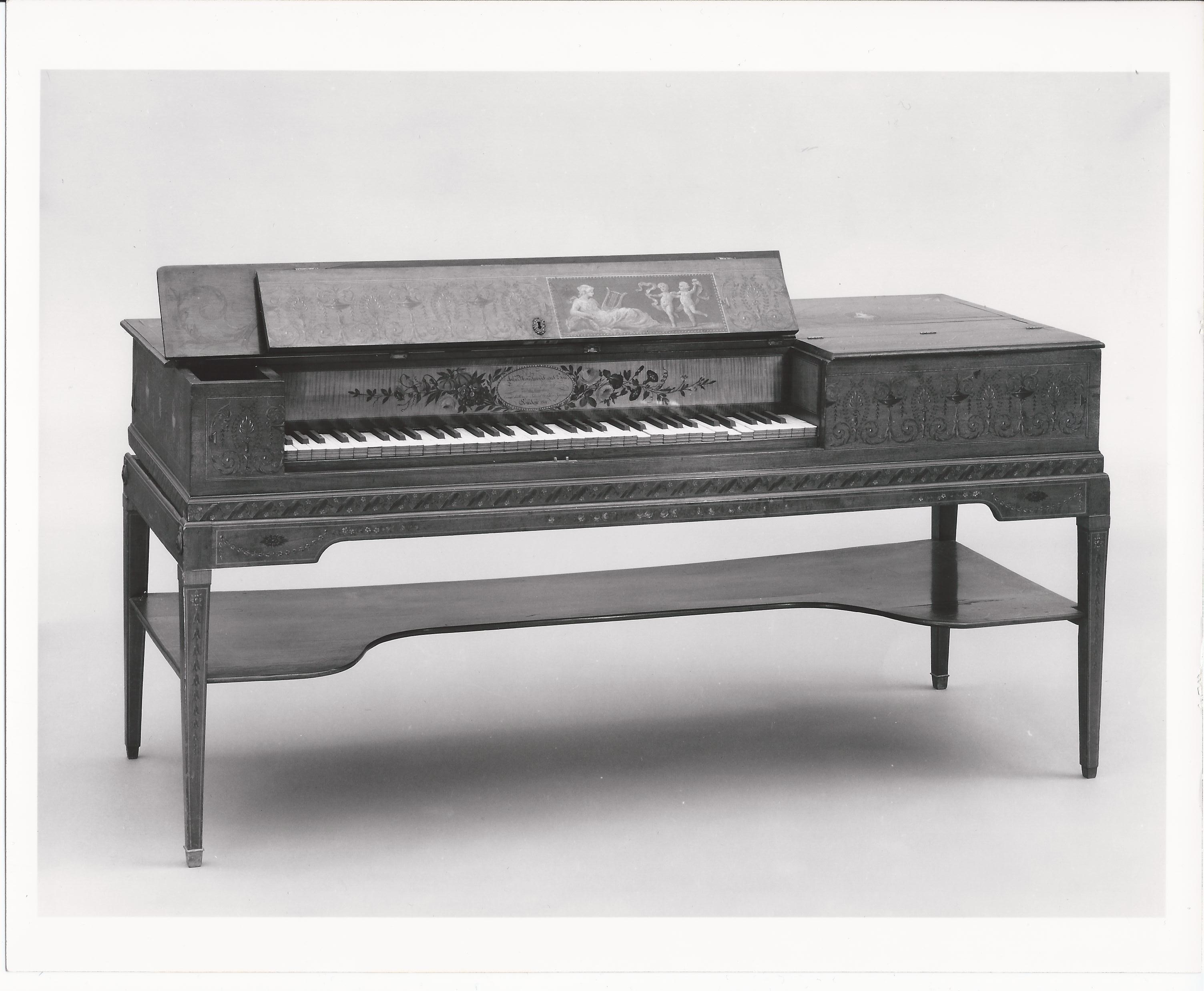
What is it?
A pianoforte is an early form of the modern piano. Unlike a harpsichord, whose strings are plucked, its strings are struck with hammers, allowing the player to vary the volume through touch.
Jane Fairfax receives a “large-sized square pianoforté” made by Broadwood, one of Britain’s leading manufacturers.
In normal English
Someone has anonymously had a large, expensive piano delivered to Jane Fairfax’s house.
This is not the Regency equivalent of sending flowers.
Why it matters in Emma
Jane is an accomplished musician but does not own an instrument. Then a very good one suddenly arrives from Broadwood’s.
Everyone immediately wants to know who sent it.
The gift is conspicuous, expensive and intensely personal because music is one of Jane’s defining accomplishments. It also arrives anonymously, which turns an enormous physical object into one of the novel’s secrets.
Austen gets considerable mileage out of the fact that it is rather difficult to discreetly give somebody a piano.
Spruce beer
What is it?
A beer or fermented drink flavoured with spruce. In Emma, Mr Knightley talks about brewing it, Frank Churchill wants to make a note of the method, and Emma remembers that both she and Knightley like it.
In normal English
Yes.
Beer with spruce in it.
Why it matters in Emma
Very little about the drink itself matters.
The important thing is that Austen builds one of Harriet’s treasured romantic relics out of an utterly mundane conversation about brewing spruce beer.
Frank Churchill sees rubbish.
Harriet sees the pencil he was holding.
Which tells us considerably more about Harriet than a paragraph explaining her feelings ever could.
Gruel
What is it?
A thin preparation of grain or meal cooked in water or milk. Mr Woodhouse is extremely fond of it and regards properly made thin, smooth gruel as close to a universal medical intervention.
In normal English
Very thin porridge.
Mr Woodhouse would like you to have some.
You are not going to win this argument.
Why it matters in Emma
Gruel is part of Austen’s characterisation of Mr Woodhouse: affectionate, anxious, convinced that his own delicate habits would improve everybody else’s health.
When Isabella visits, he proposes that everyone have gruel before bed. Emma immediately knows that almost nobody will agree, and only two bowls are ordered.
The gruel subsequently generates an entire discussion about how difficult it apparently is to get servants to make it properly.
Maria Edgeworth famously singled out the “smooth, thin water-gruel” when complaining that Emma had very little story.
Which may be the finest accidental endorsement of the novel ever written.
Harriet Smith, explained properly
Parlour-boarder
What is it?
Harriet lives at Mrs Goddard’s school as a parlour-boarder.
A parlour-boarder was not simply an ordinary pupil. The term referred to a boarding pupil who paid for particular privileges and generally occupied a more favoured position within the household than ordinary boarders.
In normal English
Harriet is at the school.
But she is not quite of the school.
She occupies an awkward little social category of her own.
Why it matters in Emma
This is crucial to understanding Harriet.
She is not introduced as a penniless schoolgirl sitting in a classroom with children.
She is seventeen, living at Mrs Goddard’s, comfortably maintained by an unknown person, and treated with enough distinction to be a parlour-boarder.
But she has no known family position.
That ambiguity is precisely what allows Emma to construct an elaborate fantasy around her: perhaps Harriet’s unknown father is a gentleman. Perhaps he is wealthy. Perhaps Harriet belongs higher than anyone realises.
Knightley, rather inconveniently, points out that none of this has actually been established.
“Natural daughter”
What does it mean?
In this context, an illegitimate daughter, meaning a child whose parents were not married to each other.
Harriet’s parentage is unknown. Austen never identifies either parent during the main course of the story, although information about her father eventually emerges.
In normal English
Nobody knows who Harriet’s parents are.
And in 1815 that matters socially in a way it does not for most modern readers.
Why it matters in Emma
Harriet’s uncertain birth is the engine behind Emma’s matchmaking disaster.
Emma sees mystery and imagines hidden gentility.
Knightley sees uncertainty and refuses to invent a pedigree for her.
Their argument about Robert Martin therefore is not simply:
Is he good enough for Harriet?
It is also:
Who exactly does Harriet get to be in this society?
Austen makes the disagreement explicit when Knightley describes Harriet as the “natural daughter of nobody knows whom,” while Emma insists there can scarcely be a doubt that Harriet’s father is a gentleman of fortune.
There can, in fact, be quite a lot of doubt.
Money and status
Emma’s £30,000
What does it mean?
Emma is described as “the heiress of thirty thousand pounds.”
That does not mean she has £30,000 of spending money sitting in a Regency current account.
A capital fortune would normally be invested and produce income.
In normal English
Emma is independently rich.
Properly rich.
She does not need a husband to provide financial security.
Why it matters in Emma
It explains an enormous amount about Emma.
She can afford not to marry.
She expects to remain mistress of Hartfield.
She has money, family position, a carriage, servants and almost complete authority over her own little world.
That is why Mr Elton imagining he might marry her is so revealing. He understands every social distinction beneath himself perfectly well, yet somehow fails to notice how far Emma sits above him.
Austen explicitly ties his ambition to Emma being “the heiress of thirty thousand pounds.”
Donwell Abbey
What is it?
Donwell Abbey is Mr Knightley’s landed estate.
Knightley is therefore not simply “a farmer,” despite being deeply involved in farming and estate business. He is a landowner managing a substantial property.
In normal English
Knightley is the bloke who owns the place.
Robert Martin farms land.
Knightley owns land.
This is not a trivial distinction in Austen’s England.
Why it matters in Emma
Knightley’s relationship with agriculture can make him feel surprisingly ordinary to a modern reader. He discusses crops, drains, tenants, apples and farm business.
But his work does not make him socially equivalent to Robert Martin.
His position comes from owning Donwell and from the landed family attached to it.
That is part of why Emma treats Knightley as her social equal while regarding Robert Martin as beneath Harriet, however badly she misjudges the latter case.
And importantly, Donwell itself is not portrayed as flashy. Knightley’s status does not need Mrs Elton’s assistance in advertising it.
Going out
Box Hill
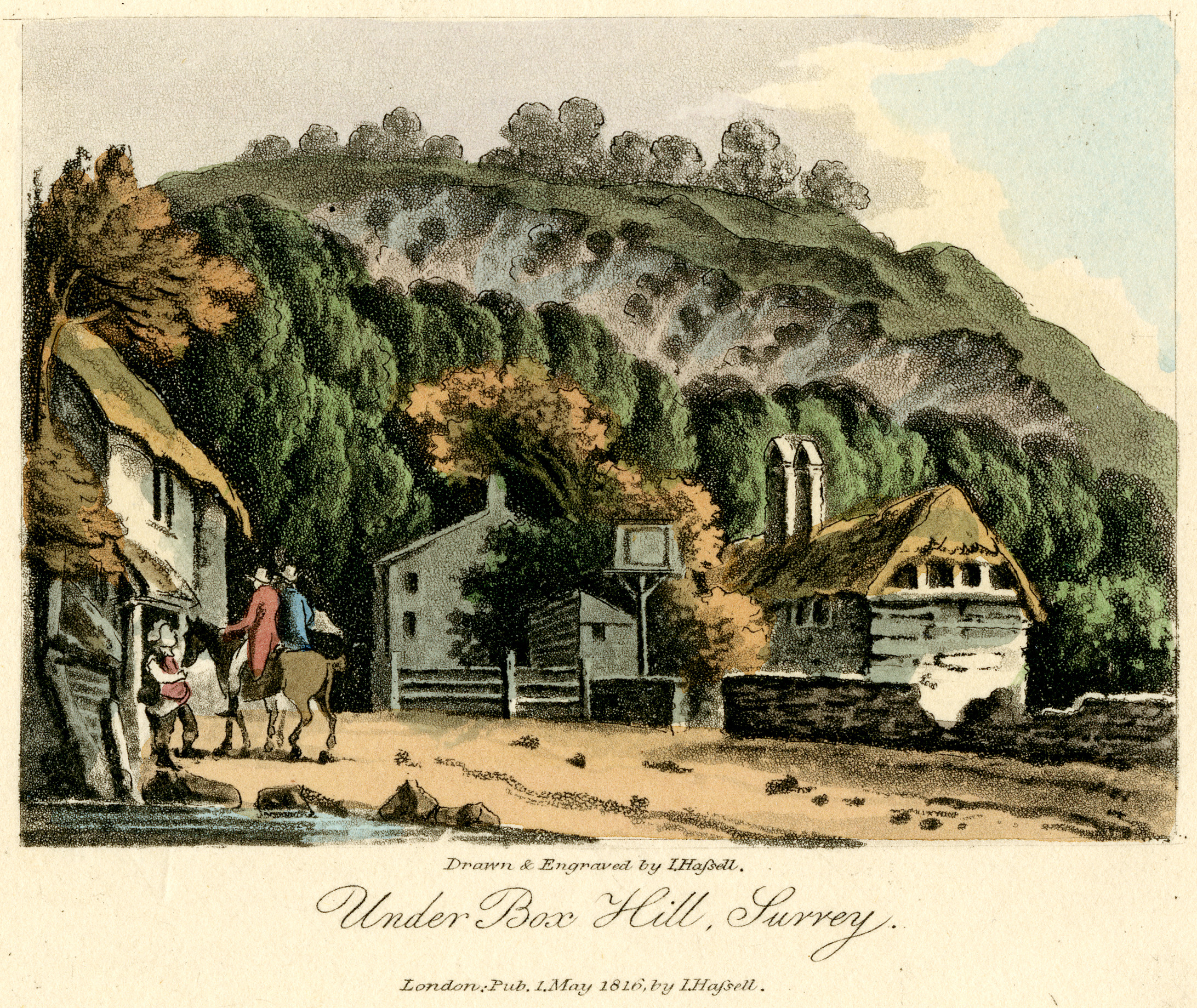
What is it?
Box Hill is real.
It is a prominent hill in Surrey, part of the North Downs, with broad views over the surrounding countryside. It was already a destination for excursions in Austen’s period.
In normal English
The gang goes on a scenic day trip.
It goes badly.
Why it matters in Emma
A modern reader can sometimes imagine the Box Hill chapter as everyone wandering into a nearby paddock for lunch.
It is more deliberate than that. This is an organised pleasure excursion to a recognised beauty spot.
Different social groups come together. Everyone is supposed to enjoy themselves. Frank Churchill becomes restless. Emma performs for him. Miss Bates becomes the easiest available target.
And Emma, surrounded by a beautiful landscape on a day explicitly arranged for pleasure, manages to have one of the worst mornings of her life.
By that evening she thinks an entire night playing backgammon with her father would have been preferable.
Which is how you know things have gone very wrong indeed.
Little things that are easy to miss
Caro sposo
What does it mean?
Italian for “dear husband.”
Mrs Elton uses it for Mr Elton.
In normal English
“My darling husband.”
But in Italian, because apparently Augusta Elton was not already irritating enough.
Why it matters in Emma
It is one of the little pieces of affected sophistication Austen gives Mrs Elton.
And there is a textual complication.
In the first edition, Mrs Elton’s first use is printed “cara sposo,” with the feminine cara instead of masculine caro. Later editors commonly corrected it.
Scholars have debated whether this was simply a printing error or whether Austen deliberately allowed Mrs Elton to get her ostentatious bit of Italian wrong.
Later in the novel, however, the phrase appears correctly as caro sposo, so do not present deliberate error as established fact.
Because this project pays attention to first-edition wording, this is exactly the kind of tiny textual detail worth preserving and explaining.
Once you know what the things are, Austen usually gets funnier.